
A student-led public history initiative.
Documenting the lived experiences, memories, and community history of the University of New Orleans.
As UNO returns to the LSU system and enters a new institutional chapter, this project asks a simple question:
Who gets to define a university’s story?
Universities often present themselves through official histories, logos, website, and milestone narratives. But those accounts are never the whole story. The history of a place also lives in classrooms, workplaces, friendships, traditions, disappointments, and everyday experiences carried by the people who know it firsthand.
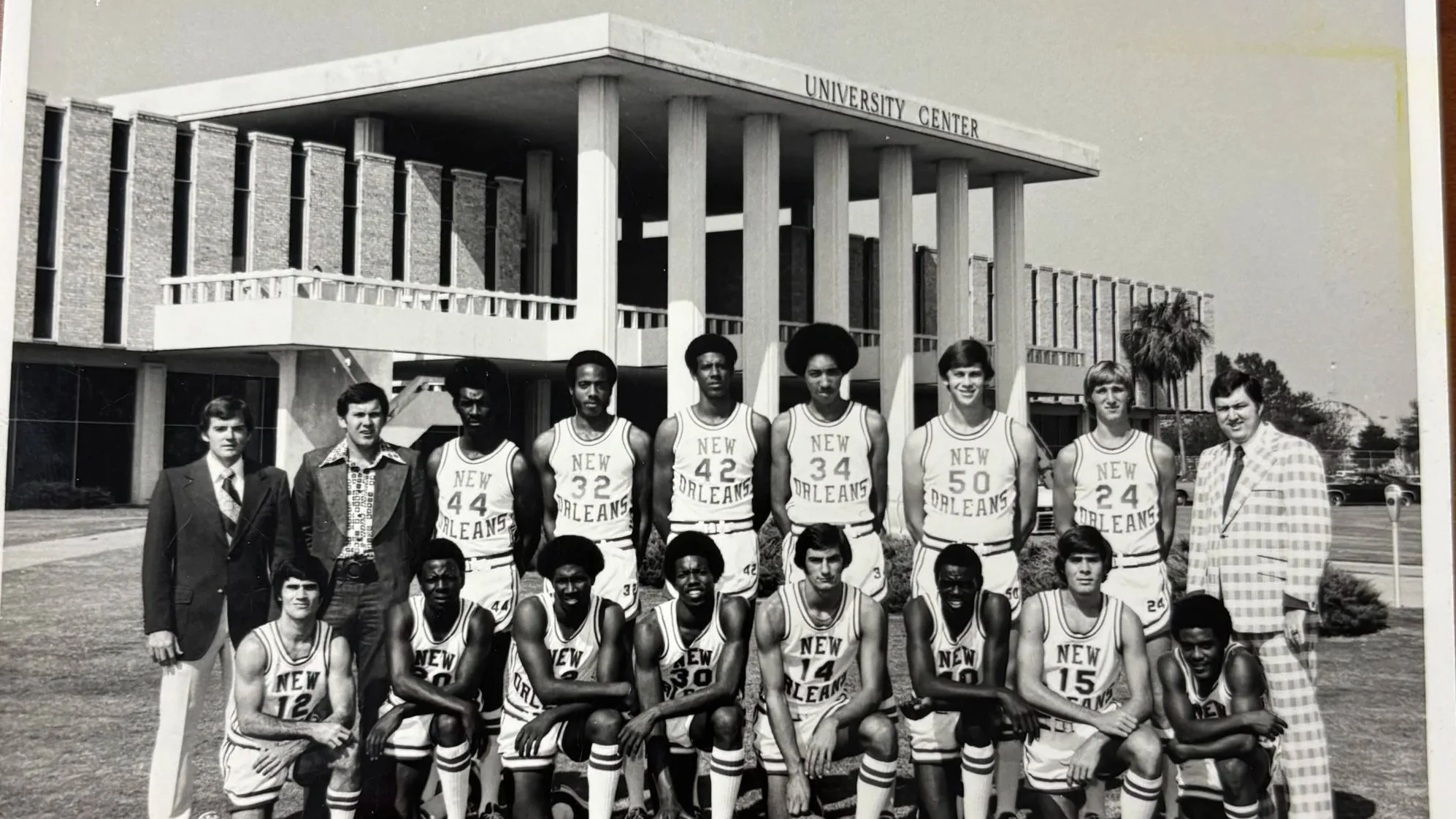
This project was inspired in part by a tension in UNO’s own public history. The university has long highlighted its opening in 1958 as the first fully integrated public university in the South. At the same time, community memory and archival evidence show us that certain parts of campus life remained segregated for years after the university opened its doors.
That tension raises broader questions: what does it mean for an institution to remember certain parts of its past while minimizing others? What changes when community memory is invited into the storytelling? Who gets to decide how a university’s identity is remembered and defined, especially during times of significant institutional and existential change?
To explore those questions, the project has conducted oral history interviews with alumni, staff, and faculty across generations, alongside archival research and collaboratibe public workshops.
The goal is not to produce one definitive history of UNO. It is to help preserve and interpret the many histories that already exist, especially at a moment when questions of name, identity, and future direction are in motion.
About the Researcher
Amanda Mester-Brown is a doctoral researcher in Justice Studies, professor, writer, and public-facing scholar based in New Orleans. This project forms part of her dissertation research on memory, race, and institutional identity.